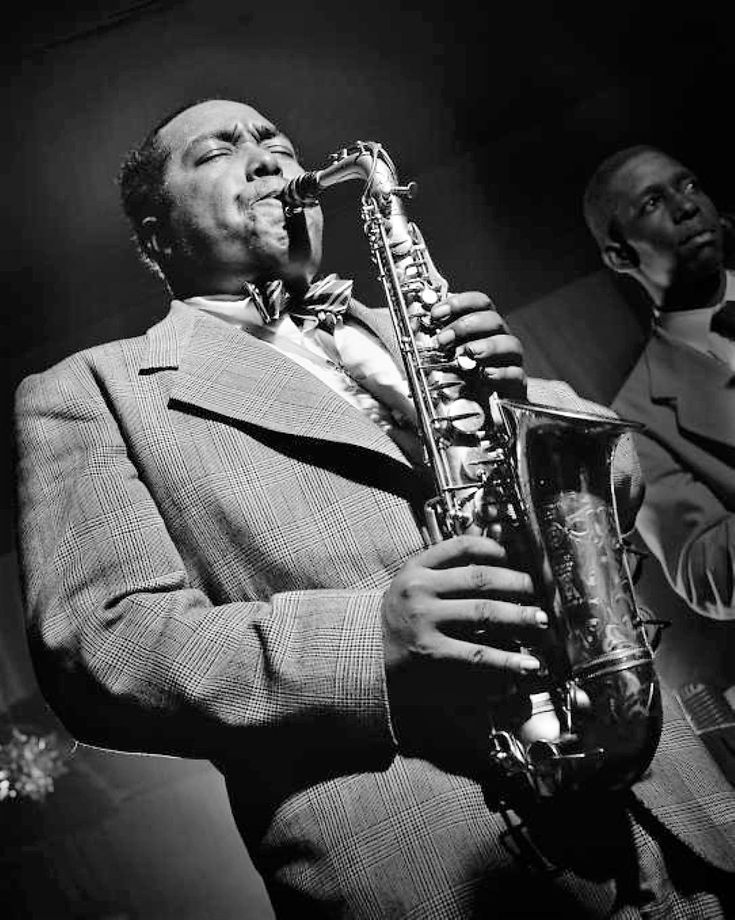
There is a version of jazz history where Charlie Parker is a footnote — a fast player from Kansas City who came up through territory bands and faded into the same haze that took a hundred other horn players of his era. That's not what happened. What happened is that a self-taught kid who got laughed off a Kansas City bandstand at seventeen came back a few years later having taught himself an entirely new harmonic language, and by his mid-twenties had made most of what came before him sound like a rough draft.
He was born Charles Parker Jr. in Kansas City in 1920, and by the time he died in 1955 — officially thirty-four, though the coroner who examined him reportedly estimated his body at fifty-three or sixty from the wear alone — he had already reshaped the vocabulary every saxophonist after him would have to learn. Bebop existed before Parker touched it. It did not sound like anything after he did.
The Woodshed Years
The origin story gets told so often it's calcified into myth, but the bones of it are true: a teenage Parker sat in at a Kansas City jam session, got lost in the changes, and was famously cut off — a cymbal reportedly thrown at his feet by drummer Jo Jones to end his set. Rather than quit, he disappeared for a season into rural Missouri, woodshedding for months with a fake book and a metronome, running through every key until his fingers found harmonic territory nobody had mapped yet. He came back able to hear extensions and substitutions other players were still years from reaching.
- Born
- August 29, 1920 — Kansas City, KS
- Died
- March 12, 1955 — New York, NY
- Instrument
- Alto saxophone
- Nickname
- "Bird" / "Yardbird"
- Key Sessions
- Savoy, Dial, Verve recordings
- Signature Cuts
- "Ornithology," "Confirmation," "Ko-Ko"
Bebop Was An Argument, Not A Style
By the early 1940s, Parker was in New York, trading ideas at Harlem sessions with Dizzy Gillespie, Thelonious Monk, and Kenny Clarke — the after-hours crowd building what would get labeled bebop almost as an insult, a music too fast and too knotted for dancing. That was the point. Bebop was younger musicians pushing back against big-band swing's obligation to entertain, insisting jazz could be listened to the way a symphony was listened to — as art first, not backdrop for a foxtrot.
Parker's playing sat at the center of that argument. He phrased in long, asymmetrical lines that ignored the bar line's usual accents, leaned into passing chords and altered harmony most working musicians hadn't fully theorized yet, and did it at tempos that made the whole thing sound less like a genre and more like a dare.
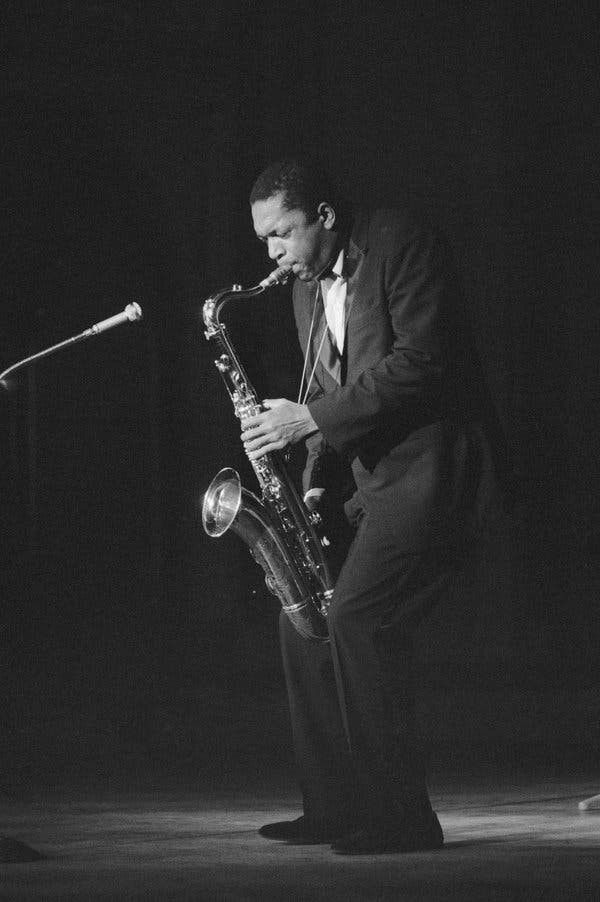
Master your instrument, master the music, and then forget all that and just play.
The Addiction Underneath The Genius
Parker's heroin use started as a teenager in Kansas City, reportedly following a car accident and a doctor's prescription, and it never fully let go of him. It's tempting, and wrong, to romanticize that — to treat the addiction as fuel for the genius rather than what it actually was, a disease that hollowed out his health, his finances, and his relationships for the rest of his short life. He was briefly committed to Camarillo State Hospital in California in 1946 after a breakdown, a period he later channeled into the tune "Relaxin' at Camarillo." He got better for stretches. He relapsed for longer ones.
By the early 1950s, his cabaret card — the New York City permit without which a musician legally couldn't perform anywhere alcohol was served — had been revoked, cutting him out of the club circuit that had made his name. A player who'd rewritten the rules of American music was, at the end, struggling to find rooms that would let him play in the city that made him famous.
Bird Lives
Parker died on March 12, 1955, at the Fifth Avenue apartment of Baroness Pannonica de Koenigswarter, a jazz patron who'd become one of his closest friends, reportedly while watching a variety show on television. He was thirty-four. Within days, graffiti reading "Bird Lives" began appearing across New York — an early, unofficial version of the tributes that circulate online today, scrawled in subway stations by people who understood before the obituaries caught up that something genuinely irreplaceable had just ended.
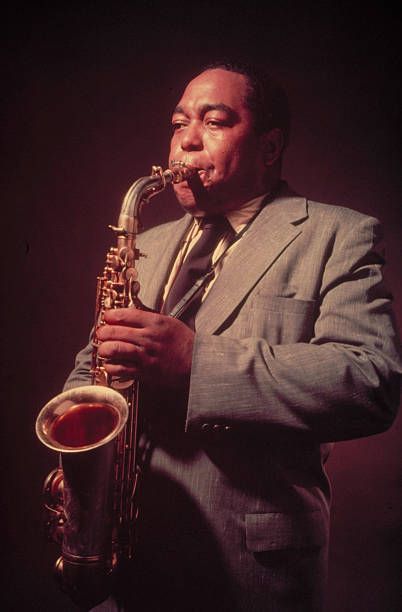
The graffiti was right in a way that's easy to underrate now. Every alto player who came after Parker — Cannonball Adderley, Jackie McLean, Phil Woods, and on down the line to saxophonists who never heard him live — is working, whether they know it or not, in a harmonic vocabulary he built out of a Kansas City humiliation, a rural woodshed, and roughly a decade of playing faster and stranger than the music around him thought was possible. That's not a legacy that requires nostalgia to hold up. It just requires listening.