
1900s – 2026
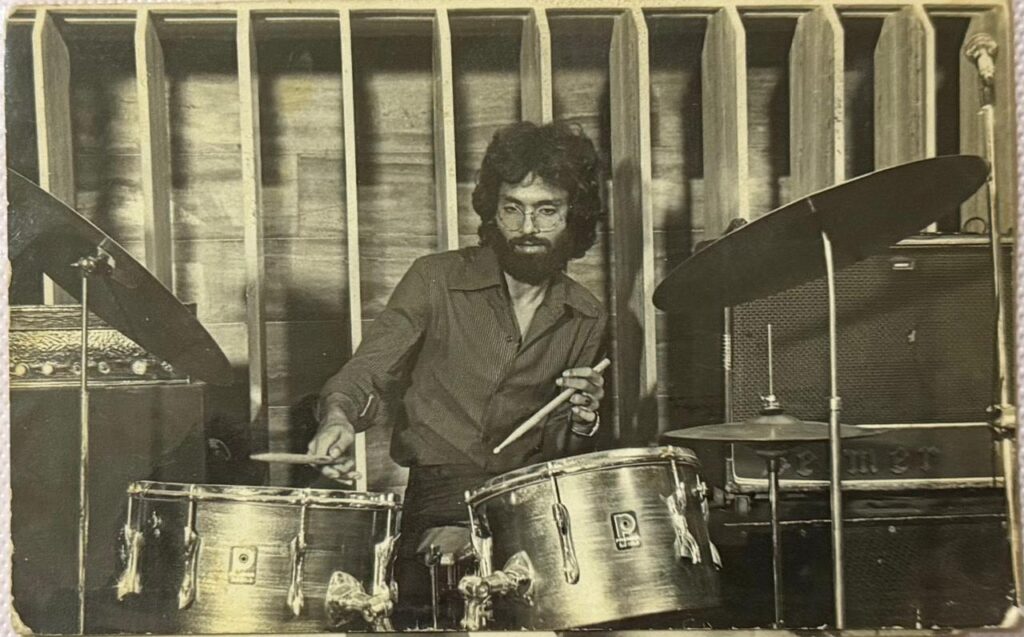
Drummer. Anglo-Indian. One of the hands behind the sound of Hindi film music in the 1970s and 80s, and behind the first serious generation of Indian jazz.
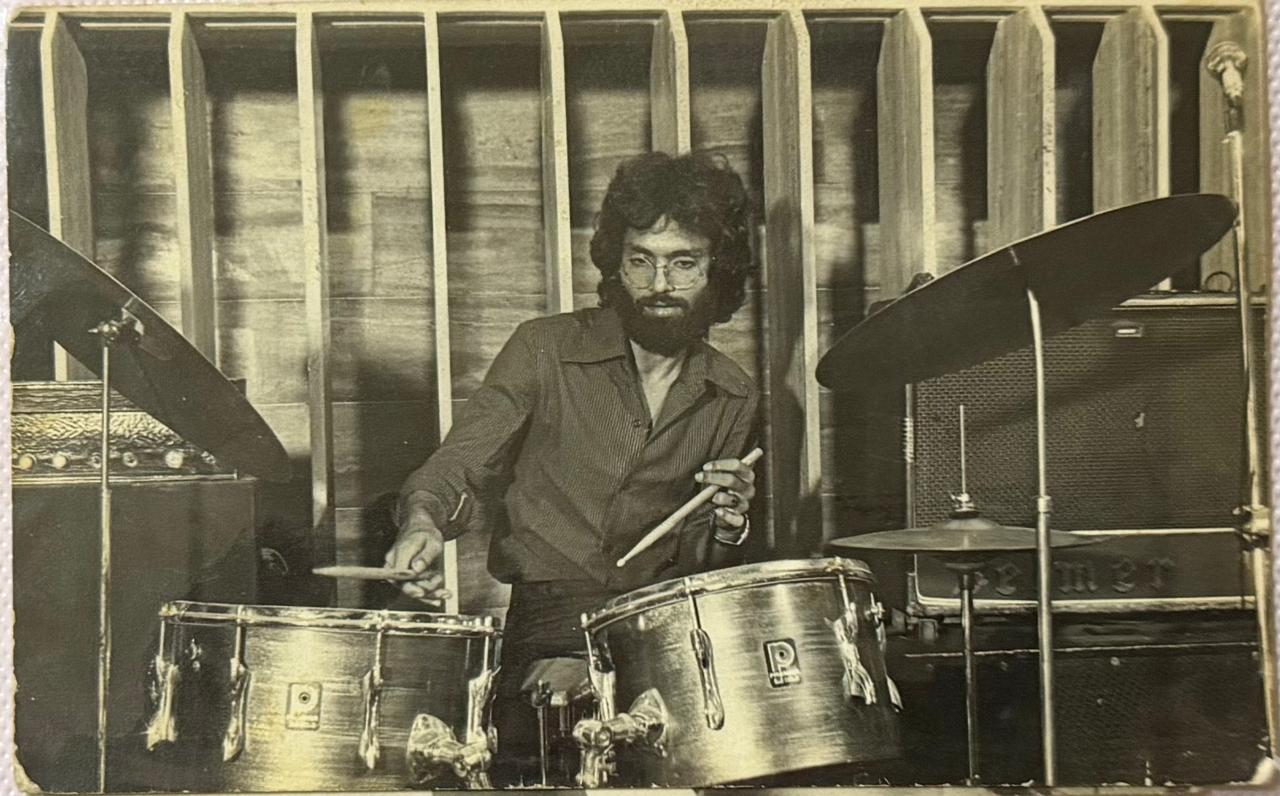
You have heard Buster Grant play. You have almost certainly never seen his name in a credit.
That was the arrangement. In the Bombay recording studios of the 1970s and 80s, the men and women who actually made the records were rarely named on them. The composer got the credit. The singer got the fame. The rhythm section got a call sheet, a session fee, and the quiet satisfaction of hearing themselves come out of every paan shop radio in the country for the next forty years.
Buster Grant was one of those players. Family and fellow musicians place him at a great many of the Hindi film dates of that era — the fills you can hum, the backbeats that hold up songs you have known since childhood without ever once wondering who was in the room when they were cut. He has now died, and the credit he never got in life is worth putting down in writing.
Buster was a Grant, and in Indian music that is a lineage rather than a surname. His father, Noel Grant, raised five children. Four of them became drummers. The fifth was a daughter.
Anglo-Indian families supplied an outsized share of India's working musicians through the middle of the twentieth century — the dance bands, the hotel orchestras, the ballroom circuits, and eventually the film studios that absorbed all of it. The Grants were one of the households where that tradition was not a career choice so much as the ambient condition of the living room.
His son Joshua, now one of Delhi's most in-demand session drummers, has described the house plainly: musicians coming in and out, jazz on the tape recorder more or less permanently, and a spare pair of sticks always lying about so a small boy could sit on the floor and copy whatever his father was working on. That is how the trade got handed down — not through a curriculum, but through proximity.
There would always be an extra pair of drum sticks, so I'd be on the floor playing, trying to imitate what my father would play.
Joshua Grant, on growing up in Buster's house
The Hindi film session of that period was a specific and unforgiving job. A composer arrived with a chart, or sometimes with nothing but a hummed line. A full orchestra sat waiting. Tape was expensive and studio time more so. The drummer was expected to read what was in front of him, invent what was not, hold a click that did not exist yet, and do it in as few takes as the budget allowed.
Grant worked in that system across its most productive stretch. The disco-inflected film soundtracks of the late seventies and the synth-and-snare pop of the eighties both ran on drummers who could switch idiom on command — a swung ride pattern in the morning, a four-on-the-floor after lunch, a filmi ballad before dinner. Versatility was not a stylistic flourish. It was the qualification.
Because Indian film music kept almost no session documentation, most of this survives as oral history: who was on which date, who cut which fill. It is a poor archive for a body of work this large. It is also the only one there is.
Film work paid. Jazz was what the same musicians did afterwards, in clubs and hotel ballrooms, for a fraction of the money and considerably more of themselves. Grant belonged to the circle around Louiz Banks — the pianist now universally called the godfather of Indian jazz — whose bands drew from the same small pool of players who could genuinely improvise: Braz Gonsalves on saxophone, Karl Peters and Lew Hilt on bass, and Grant among the drummers holding it together.
What that generation was attempting has since become ordinary and was then close to unheard of: taking jazz time and putting Indian rhythmic thinking through it without turning either into decoration. Grant sat comfortably in both, which is why he kept getting called.
Joshua Grant began performing at six and has spent more than twenty-five years since as a professional drummer and session player in Delhi. He learnt his foundations from Buster, then studied for three years under the American jazz drummer Gary Novak, trained formally in Carnatic music, and studied under the Kathak master Pandit Birju Maharaj — an unusually complete rhythmic education, and one built on what he absorbed at home first.
The list of people he has played with reads as a continuation of his father's: Anoushka Shankar, Louiz Banks, Karsh Kale, Shubha Mudgal, Asha Bhosle, Kailash Kher. He has been a core member of the Delhi bands Syncopation and Radius, the rhythmic backbone of the choir Artistes Unlimited, and the drummer on scores for Pepsi, Jaguar and Vodafone. He sat on the jury for Drum-off India and headlined the Bengaluru Drum Fest earlier this year.
He is not the only one. The family produced other teachers too, including the veteran drummer Maynard Grant, who has coached young Indian players including the prodigy Lydian Nadhaswaram.
This is what a session musician's legacy actually looks like. Not a discography — the discography was never his to sign. It is a room full of drummers who play the way they do because of how one man played, and a body of recorded music that has outlived the paperwork that failed to name him.
Somewhere on a film soundtrack you have loved your whole life, there is a fill you could sing back right now. Buster Grant played it. Nobody wrote it down.
Now somebody has.