Delhi never sleeps — and neither does its noise. Whether you're running a recording studio in Noida, building a home theatre in South Delhi, or trying to hold a focused meeting in Gurugram, proper acoustic treatment and soundproofing is the difference between a frustrating space and a world-class one. This guide explains everything, and shows you how BigFuz can help.
Acoustic Treatment vs. Soundproofing — What's the Difference?
These two terms are often used interchangeably, but they solve very different problems. Understanding the distinction is the first step to getting the right solution for your Delhi space.
Acoustic Treatment
Controls sound inside a room — reducing echo, flutter echo, bass buildup, and reverb to make the room sound great.
Soundproofing
Prevents sound from travelling between spaces — blocking traffic noise, neighbours, or keeping your music private.
Both Together
Most professional spaces — studios, home theatres, podcasting booths — require a blend of both for optimal results.
A room with thick walls but no treatment will still sound boomy and smeared. Conversely, a room full of acoustic foam won't stop traffic noise from bleeding in. In a dense city like Delhi, you almost always need both strategies working together.
Why Acoustic Treatment Matters in Delhi & NCR
Delhi-NCR is among the noisiest urban environments in the world. From Connaught Place to Noida Expressway, ambient noise levels routinely exceed 70–80 dB — well above the recommended 45 dB for studios and offices. This creates unique challenges:
Urban Noise Pollution
Traffic, construction, generators, and street vendors create a constant low-frequency rumble. Standard construction in DDA flats or newer residential societies provides minimal noise isolation. Without proper sound insulation in Delhi, this noise bleeds into every recording, meeting, and home cinema experience.
High-Rise & Apartment Living
Delhi's apartment culture means thin concrete slabs between floors, hollow internal walls, and shared HVAC ducts — all notorious sound transmission pathways. Impact noise from footsteps above, plumbing noise, and neighbour conversations are everyday complaints.
India's Booming Creator Economy
Delhi-NCR is home to thousands of YouTubers, podcasters, musicians, and content creators who need affordable, high-performance acoustic solutions. A treated room dramatically improves recording quality without expensive microphone upgrades.
Most home studios in Delhi suffer from the same three problems: excessive low-frequency buildup in corners, flutter echo between parallel walls, and high-frequency brightness from untreated glass surfaces. All three are fixable with targeted acoustic treatment — often without major construction.
Types of Acoustic Treatment Solutions
Acoustic Panels (Sound Absorbers)
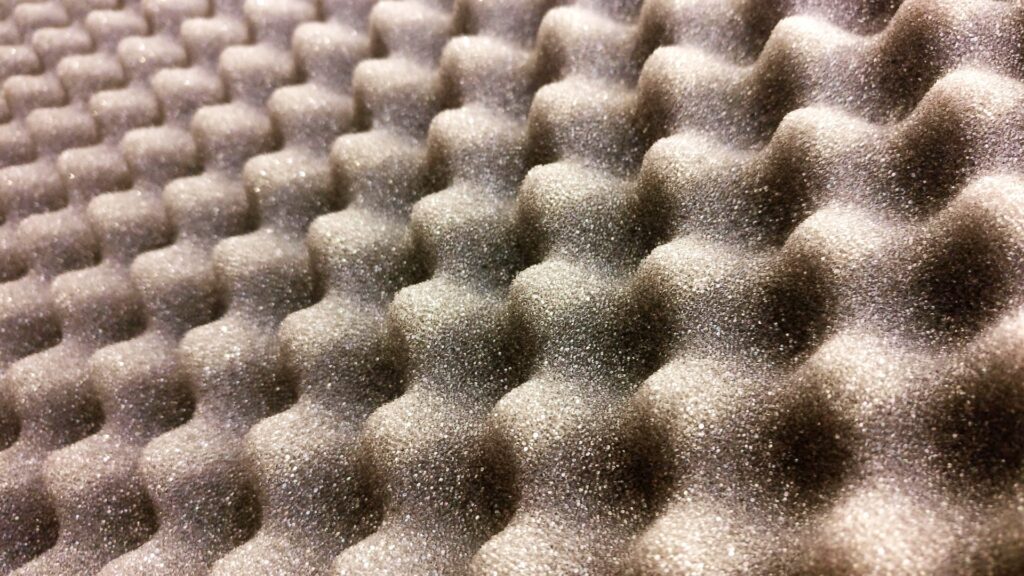
The most common treatment. Panels made from high-density foam, rockwool, or fabric-wrapped fibreglass absorb mid and high frequencies, reducing echo and reverberation. Placed strategically on walls and ceilings, they transform a live-sounding room into a controlled listening or recording environment.
Bass Traps
Low frequencies are the hardest to control. Bass traps — typically thick, dense panels placed in room corners — absorb problematic bass buildup that causes boomy, muddy audio. They're essential in any recording studio acoustic treatment in Delhi.
Diffusers
Rather than absorbing sound, diffusers scatter it — preserving a sense of space and liveliness while eliminating harsh reflections. Ideal for mastering suites, home theatres, and auditoriums where a completely "dead" room would feel unnatural.
Mass Loaded Vinyl (MLV)
A flexible, dense barrier membrane that significantly increases the sound transmission loss (STL) of walls, ceilings, and floors without adding bulk. Widely used in soundproofing solutions in Delhi NCR for retrofitting existing spaces.
Acoustic Flooring & Floating Floors
Floating floor systems decouple the floor slab from the structure, dramatically reducing impact noise transmission — critical in multi-storey Delhi apartments and commercial buildings.
Acoustic Doors & Window Seals
The weakest link in any soundproofing system is almost always doors and windows. Acoustic-rated doors and double-glazed or laminated window assemblies with proper seals can add 30–50 dB of additional isolation.
Our Services: What BigFuz Offers in Delhi
BigFuz provides end-to-end acoustic and soundproofing services across Delhi, Noida, Gurugram, Faridabad, and Greater Noida. Every project starts with a detailed acoustic consultation — we measure your space, identify the problems, and design a solution that fits your budget and goals.
Recording Studios
Full acoustic design, isolation booths, control room treatment, and noise floor reduction for professional results.
Home Theatres
Immersive cinematic experience with balanced reverb, bass management, and total noise isolation.
Offices & Boardrooms
Speech intelligibility, privacy partitions, and open-plan noise control for productive work environments.
Podcast & Content Studios
Broadcast-ready sound in small spaces — ideal for Delhi's growing creator community.
Residential Spaces
Block neighbour noise, traffic din, and construction sounds from your home or apartment.
Auditoriums & Halls
Precision reverberation tuning, balanced sound distribution, and architectural acoustic design.
How to Choose the Right Acoustic Solution for Your Delhi Space
The right treatment depends on three things: what you're doing in the space, what problems you're experiencing, and your budget. Here's a quick framework:
Step 1 — Define Your Problem
Is sound bleeding into your space (traffic, neighbours)? That's a soundproofing problem. Is the sound inside your room muddy, echoey, or harsh? That's an acoustic treatment problem. Most spaces have both.
Step 2 — Assess the Space
Room dimensions, surface materials, existing construction, and usage all affect what's needed. A professional acoustic measurement (using calibrated measurement software) gives objective data — not guesswork. BigFuz uses industry-standard tools including REW (Room EQ Wizard) analysis to map your room's exact response.
Step 3 — Prioritise by Impact
Bass traps in corners deliver the highest return on investment in most Delhi rooms. After that, first reflection points on side walls and ceiling, then rear wall diffusion or absorption. Soundproofing interventions are typically prioritised by the weakest transmission paths first — usually doors and HVAC openings.
Step 4 — Budget Realistically
Good acoustic treatment for a small home studio in Delhi can start from ₹40,000–₹80,000. A full recording studio build-out ranges from ₹3–15 lakhs depending on size and isolation targets. We offer scalable solutions at every budget point — and a free consultation to help you spend wisely.
More acoustic foam is not always better. Over-treating a room creates an unnaturally dead, fatiguing listening environment. The goal is a balanced, controlled space — not a padded cell. BigFuz designs for the right balance, not just the maximum amount of material.
Common Acoustic Problems in Delhi Homes & Studios
Flutter Echo
A rapid, repeating "zing" or "ping" sound caused by sound bouncing between two parallel reflective walls. Extremely common in rectangular Delhi flats with bare concrete or plaster walls. Fixed with absorption or diffusion on at least one of the parallel surfaces.
Low-Frequency Buildup ("Bass Boom")
Standing waves in small rooms cause certain bass frequencies to pile up, making music and speech sound boomy and unclear. Room modes are determined by room dimensions and cannot be EQ'd away at the source. Bass traps are the correct solution.
Excessive Reverberation
Hard floors, glass windows, and bare walls in modern Delhi interiors create reverb times (RT60) of 0.8–1.5 seconds — far too long for recording or intelligible speech. A treated room targets 0.3–0.5 seconds for recording and 0.6–0.9 seconds for home cinema.
Noise Ingress
Delhi's traffic, Metro construction, and dense urban environment create broadband noise that's particularly challenging. Low-frequency rumble from heavy vehicles is especially difficult to block and requires mass-based solutions like MLV and decoupled construction.
Frequently Asked Questions (FAQ)
Ready to Transform Your Space?
Book a free acoustic consultation with the BigFuz team — we'll visit your Delhi space, measure the problems, and build a custom solution that actually works.
Get a Free Consultation →